 This is another in the continuing series on eFIP, an empirically grounded alternative to the conventional fixed-weight/ahistorical FIP (fielding-independent pitching) measure of pitching proficiency.
We’ve done a variety of things with it. One was to show that it generates a superior in- and out-of-sample predictor of pitching-runs saved to either Baseball Reference’s or FanGraphs’. Another was to use it to rank season and career performances of individual pitchers.
I thought it would be fun now to use it to evaluate team starting pitching.
Here is a top-50 ranking of the teams based on their starters’ total “standardized pitching runs saved.”
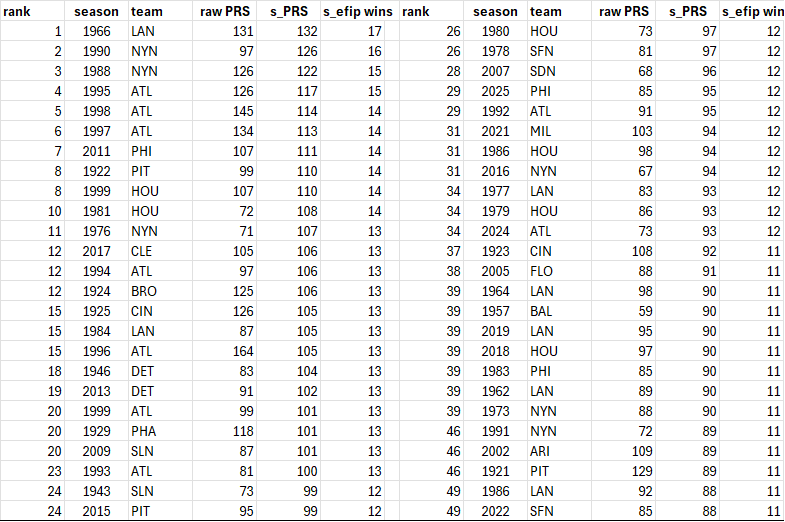
As you no doubt recall, the “standardized” measure reflects season-standardized values, which are rescaled here based on the AL/NL historical medians for team- starter pitching-runs saved (PRS) and for standard deviations in the same. This transformation puts all seasons—from 1900-2025, but excluding the 2020 COVID-shortened season—on a common scale. Raw or unadjusted season total PRSs are also included in the table.
eFIP wins is the estimated impact of the team starters in wins for a team that over 162 games would have scored the historical mean number of runs and otherwise have allowed the historical mean number.
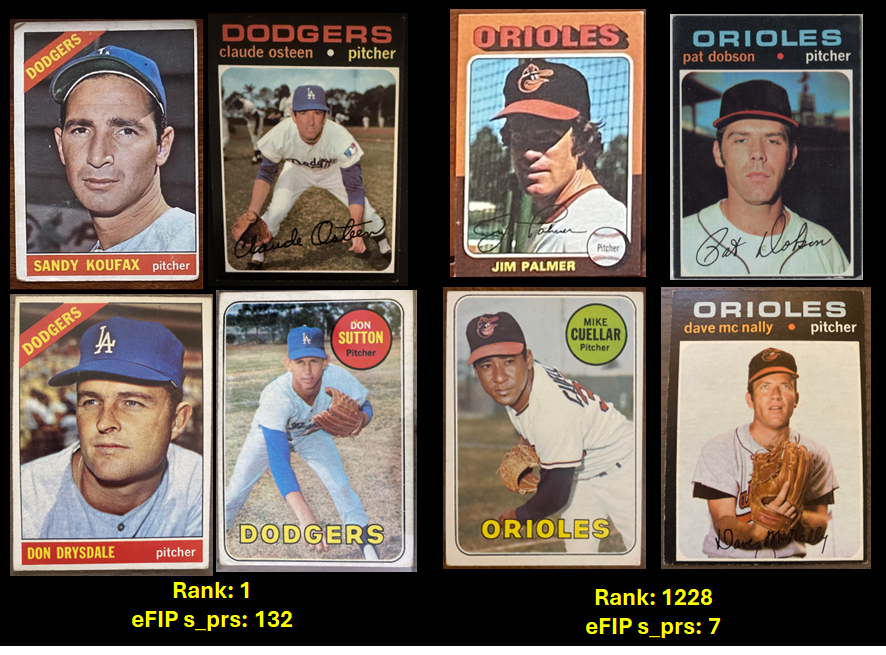
Number 1 might or might not be surprising. But a staff anchored by Koufax with 52 pitching-runs saved, and that included Don Drysdale (25) and Don Sutton (25), had to be stellar, right? Claude Osteen rounded things with 30 more! (I’m using unstandardized individual runs saved because they add up properly to the raw team total; individual standardized don’t because the weighted mean and standard deviation reference values for individual pitcher performances don’t transform linearly into the team ones).
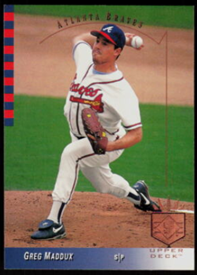
But one thing is truly amazing is now dominant the 1990s Braves starters were. With Maddux, Smoltz, and Glavine consistently chipping in, eight of their seasons are in the top 50!
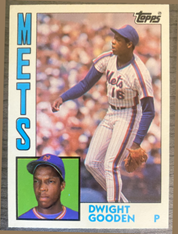
The late 80s and early 90s Mets were also outstanding. Led by Dwight Gooden and David Cohn with help from various others including Sid Fernandez, Frank Viola, and Ron Darling, they hold four of the top 50 spots, including second and third!
It should be noted, though, that FanGraphs, which uses the conventinal version of FIP as the basis of its pitcher WAR system, also doesn’t give them Baltimore much respect. It ranks the Orioles 6th in pitching WAR in 1971 (a starter-reliever aggregation).
Biggest likely surprise of all? The 1971 Orioles. Famous for four 20-game winners—Jim Palmer, Mike Cuellar, Pat Dobson, and David McNally—they rank 1228 overall!
They weren’t even ranked number 1 in 1971. Far from it—13th.
But look: we all know number of wins is not a valid measure of pitcher value; it is confounded by team offense and fielding. If the 1971 Orioles weren’t the best fielding team in history, then they can only be behind one of the other Orioles squads that played in the late 60s and early 70s.
Well, make what you will of this! I’ve posted the entire team rankings, and the individual ones, too, in the data library!